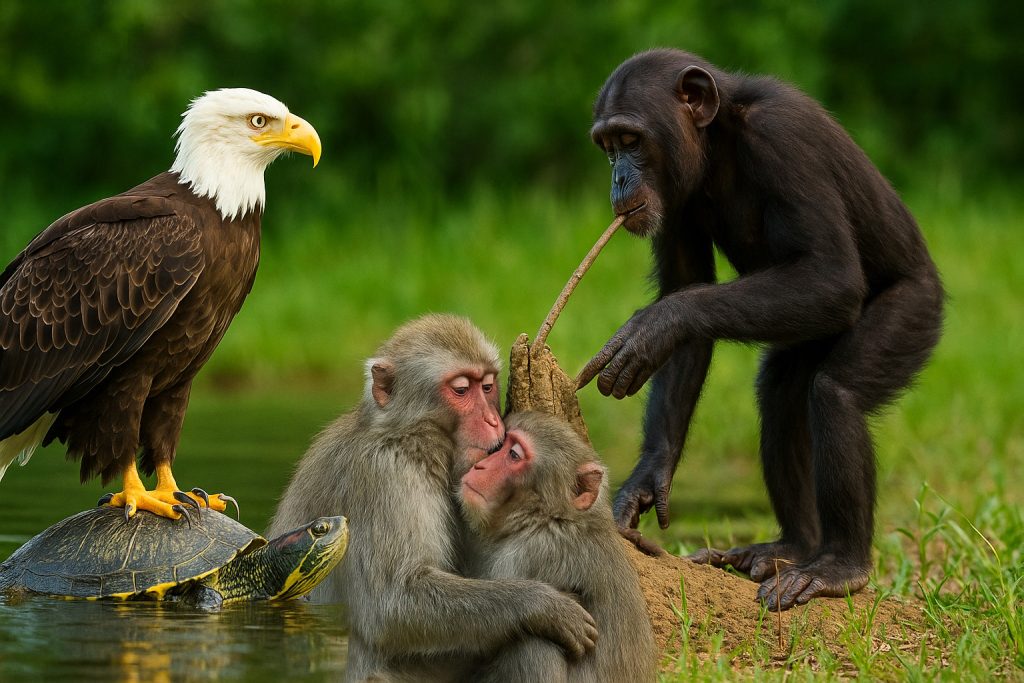
Rare Animal Behaviors That Will Leave You Speechless
The animal kingdom is a treasure trove of stunning behaviors and interactions that sometimes defy our understanding. From remarkable communication skills to unique survival strategies, the diverse ways animals respond to their environments can be both fascinating and bewildering. In this article, we will dive deep into rare animal behaviors that not only leave us speechless but also shed light on the intricate tapestry of nature.
The Unbelievable Communication of Dolphins
Dolphins are well-known for their high intelligence and social nature. One of the most intriguing aspects of their behavior is their ability to communicate using a complex system of whistles, clicks, and body language. Recent studies suggest that dolphins may even have names for one another!
“Dolphins use unique signature whistles that function like a name. This allows them to identify each other and communicate specific information,” says Dr. Denise Herzing, a marine mammal scientist.
This sophisticated level of communication is not only reserved for social interactions but also plays a critical role in hunting. Dolphins exhibit cooperative hunting techniques, where they use vocalizations and physical gestures to coordinate their efforts.
The Dance of the Honeybees
The fascinating world of honeybees unveils another remarkable behavior: the waggle dance. When a forager bee finds a rich source of nectar, it performs a unique figure-eight dance to inform other bees about the location of the food source.
The dance conveys both direction and distance. The angle of the dance relative to the sun indicates the direction, while the intensity and duration of the waggle component provide information on how far the food is located. This mutual communication is critical for the survival of the colony and showcases the extraordinary social structure of bees.
Image Source: Viral Daily Now
The Altruism of Elephants
Elephants are known for their deep emotional connections and strong familial bonds. One behavior that astounds researchers is their apparent altruism. Elephants will often help injured or distressed members of their herd, sharing food and water and guarding the wounded individuals from potential predators.
This behavior demonstrates their high level of empathy, which is rare in the animal kingdom. According to Dr. Joyce Poole, a leading elephant researcher:
“Elephants care deeply for their families, displaying behaviors that suggest compassion and understanding. Their capacity to empathize sets them apart from many other species.”
Crows: The Clever Problem Solvers
Among birds, crows reign supreme regarding intelligence and adaptability. Studies have shown that these birds possess exceptional problem-solving skills, a trait often associated with primates. For instance, crows have been observed using tools, such as fashioning sticks to extract insects from tree crevices.
Additionally, crows display advanced planning abilities. In various experiments, they demonstrated the capacity to save tools for future use—an ability that reflects foresight and rational thinking. Their intelligence is complemented by complex social structures where they can recognize individual humans and even hold grudges against those who have wronged them.
The Ballet of Manta Rays
The behavior of manta rays during their mating rituals is nothing short of a ballet. These magnificent creatures gather in marine hotspots to perform intricate courtship displays that can be mesmerizing to witness.
Manta rays exhibit behaviors like somersaults and rapid spins, showcasing their grace underwater. The mating process may involve multiple males competing for the attention of a female, leading to fascinating aerial displays above the water’s surface. The combination of elegance and social interaction make manta rays one of nature’s most captivating performers.
The Amazing Migration of Monarch Butterflies
The annual migration of monarch butterflies is a stunning example of instinctual behavior. Every autumn, these delicate creatures travel thousands of miles from North America to central Mexico. This remarkable journey spans several generations, with many butterflies completing only part of the trip.
Researchers have discovered that monarchs use a combination of environmental cues, such as the angle of the sun and earth’s magnetic field, to navigate during their migration. Their ability to find the same exact trees in Mexico each year demonstrates an incredible instinct often compared to an innate GPS system.
The Cooperative Hunting of Orcas
Orcas, or killer whales, are among the most intelligent and social marine mammals. One of their most striking behaviors is their cooperative hunting technique, known as “carousel feeding.” In this complex strategy, orcas work together to herd schools of fish into tight balls before taking turns to feed, showcasing their ability to strategize and communicate during the hunt.
This behavior underscores the social dynamics within orca pods, which often consist of family groups with strong bonds. Such cooperation not only highlights their intelligence but also emphasizes the importance of family and teamwork in their survival.
The Art of Camouflage: Chameleons and Cuttlefish
Camouflage is a valuable survival technique utilized by many animals, but few do it as dramatically as chameleons and cuttlefish. Chameleons can change their skin color based on mood, temperature, and environmental conditions, making them adept at blending in with their surroundings.
Cuttlefish, on the other hand, can alter not just their color but also the texture of their skin, allowing them to mimic various marine environments almost flawlessly. These adaptations serve both as a defense mechanism against predators and a hunting advantage by ambushing unsuspecting prey.
The Mysterious Behavior of Octopuses
Octopuses are enigmatic creatures known for their intelligence and unique behaviors. One particularly striking behavior is their ability to use tools—an ability once thought to be exclusive to mammals and birds. Octopuses have been observed using coconut shells and seashells to create shelters or as shields against predators.
Moreover, their remarkable problem-solving skills are on display in various experiments where they have successfully opened jars and navigated mazes. The combination of intelligence, adaptability, and creativity makes the octopus a truly extraordinary animal.
The Playfulness of Sea Otters
Sea otters are not only adorable but exhibit fascinating social behaviors, particularly their playfulness. These creatures engage in various playful activities, such as sliding down rocks, juggling kelp, and playing with one another. This playful nature is not merely for enjoyment; it serves vital social and survival functions.
By playing, sea otters strengthen social bonds within their communities and experience an essential aspect of learning. Consequently, their playful demeanor can also be seen as a critical factor in their survival, encouraging cooperation while hunting or rearing young.
The Curious Habits of Pika
In some of the highest mountains in North America, you can find the small but fascinating pika. A close relative of the rabbit, these tiny mammals have a unique behavior: they gather and store food during the warmer months to sustain themselves through long, harsh winters.
This behavior showcases their remarkable adaptability to extreme environmental conditions and provides insight into the challenges posed by climate change. As habitats shift and become warmer, understanding the pika’s foraging strategies may be crucial for conservation efforts.
The Boldness of Komodo Dragons
The Komodo dragon, the largest living lizard species, possesses behaviors that are both impressive and intimidating. Fierce predators, these dragons exhibit a combination of stealth and power when hunting their prey. They are ambush hunters that typically stalk their prey using camouflage before launching a sudden attack.
Additionally, Komodo dragons have a complex social structure, often engaging in territorial displays and interactions. While their size and strength make them fearsome, their social behaviors reveal a layer of sophistication often overlooked in reptiles.
Q&A Section
Q: What is the most intelligent animal?
A: While many animals exhibit varying degrees of intelligence, dolphins, crows, and octopuses are often cited among the top contenders for the title of most intelligent. Their problem-solving skills, communication abilities, and social behaviors highlight their cognitive complexity.
Q: How do animals communicate with each other?
A: Animals use a wide range of methods to communicate, including vocalizations, body language, chemical signals, and even tactile cues. Some species have developed intricate communication systems, like the waggle dance of honeybees or the signature whistles of dolphins.
Q: Is animal behavior influenced by their environment?
A: Absolutely! Environmental factors, including climate, habitat availability, and social dynamics, can greatly influence animal behaviors. For example, migratory patterns often correlate with seasonal changes in food availability and nesting conditions.
Q: Can animals experience emotions similar to humans?
A: Many studies suggest that animals, like elephants and dogs, can experience emotions such as joy, grief, and empathy. This emotional complexity reveals a rich inner life that may be more similar to humans than previously understood.
Conclusion
The animal world is filled with astonishing behaviors that continue to educate and inspire us. From the intricate communication of dolphins to the playful antics of sea otters, the diversity and complexity of these actions reveal the remarkable adaptability of life on Earth.
Understanding these rare animal behaviors not only enhances our appreciation for the natural world but also underscores the importance of conservation efforts to protect these unique species and their habitats. As we continue to observe and study these behaviors, we learn more about the deep connections that exist in nature, inspiring us to safeguard the treasures of our planet.
For more insightful articles on animal behaviors, consider exploring more resources available on National Geographic, BBC Earth, and Science Daily.
Feel free to adapt this article with internal links or additional sections as needed to fit your blog’s focus and style!


