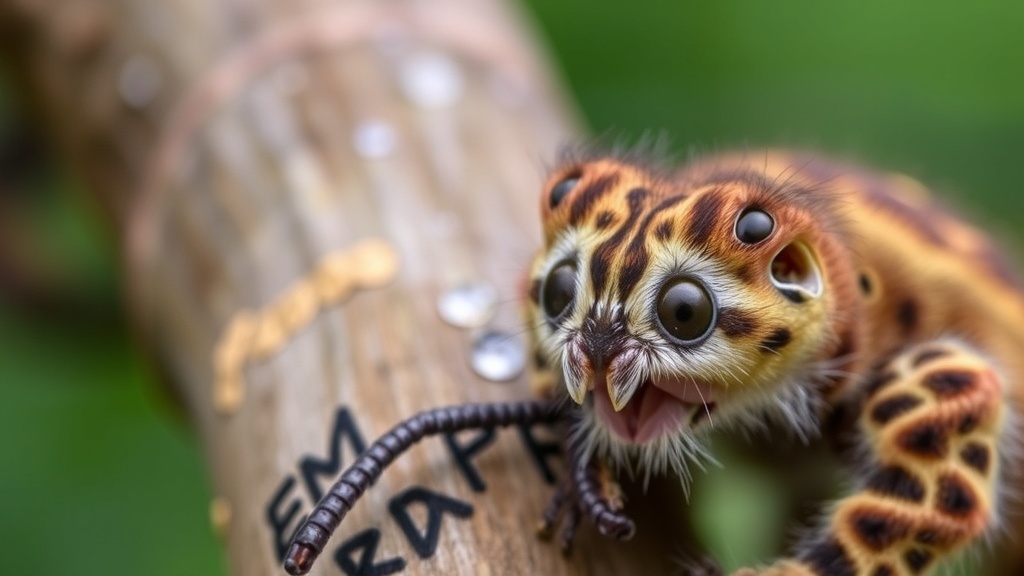
Nature’s Cutest Killers: When Cuddly Turns Deadly
In the vast and wondrous tapestry of the animal kingdom, few things captivate us quite like the sight of a creature possessing undeniable cuteness. Large, innocent eyes, fluffy fur, tiny paws – these features trigger a primal instinct within us, a desire to protect and adore. But beneath this charming exterior often lies a stark, formidable reality: some of nature’s most adorable inhabitants are also its most efficient, and sometimes, deadly, predators. This intriguing paradox challenges our perceptions, reminding us that appearances can be profoundly deceiving in the wild.
The world is full of creatures that embody this surprising duality, showcasing remarkable survival skills that range from venomous bites to lightning-fast hunts. Far from being harmless, these seemingly innocuous animals are perfectly adapted to their environments, often leveraging their small size or disarming looks to become formidable forces in their respective ecosystems. Join us as we explore the fascinating, sometimes shocking, world where cuddly truly turns deadly, uncovering the hidden prowess of nature’s most charming assassins.
The Deceptive Charm: Why Cuteness Disarms Us
Our attraction to “cute” animals is deeply rooted in human psychology. Features like large heads relative to their bodies, prominent eyes, rounded bodies, and soft textures often mimic traits we associate with human infants. This phenomenon, known as “Kinderschema” or “baby schema,” elicits a nurturing response, reducing our natural caution and increasing our empathy. We project innocence and harmlessness onto creatures that possess these attributes, making us less likely to perceive them as a threat.
This inherent bias means that when we encounter an animal that fits our definition of cute, our guard is naturally lowered. We might be tempted to approach, to interact, or even to try and “rescue” them, completely overlooking the sharp claws, potent venom, or lightning reflexes that are part of their survival arsenal. It’s a powerful evolutionary trick of nature, often working in the animal’s favor, whether to avoid detection as a predator or to lull prey into a false sense of security. Understanding this psychological aspect is the first step in appreciating the true power and danger of nature’s cuddliest killers.

Image Alt: Nature’s Cutest Killers: When Cuddly Turns Deadly
Masters of Manipulation: Predators in Disguise
Some of the most effective predators in the wild are those that blend seamlessly into their environment, or even disarm their targets with an unexpected appearance. These creatures don’t necessarily rely on brute force alone; their success often stems from a combination of stealth, speed, and a surprising capacity for violence.
The Stoat: A Tiny Terror in a White Coat
With their sleek, slender bodies, bright eyes, and often an adorable, inquisitive face, stoats (also known as ermine in their winter white coat) are undeniably cute. They dart through fields and forests with incredible agility, seemingly harmless. Yet, these small carnivores are relentless and incredibly efficient killers. Weighing barely more than a pound, a stoat can take down prey many times its size, including rabbits, hares, and birds.
Their hunting technique is legendary: a lightning-fast pursuit followed by a precise, crushing bite to the back of the neck or skull. Stoats are known for entering burrows and terrorizing entire rabbit colonies. Their high metabolism demands a constant supply of food, driving them to hunt almost non-stop. Observing a stoat in action is a masterclass in predatory efficiency, revealing a ferocious spirit hidden beneath an undeniably appealing façade. Their agility and precision are truly a testament to animal survival tactics that will shock you.
Leopard Seals: Antarctic’s Sleek, Apex Predator
Imagine a large, beautiful seal, with a spotted coat and an almost serene expression as it glides through the icy waters of the Antarctic. The leopard seal might look like just another marine mammal, but it is in fact the continent’s second-largest predator, right after the orca. Their powerful jaws, lined with sharp, interlocking teeth, are designed for tearing flesh.
Leopard seals are apex predators, feeding on a diverse diet that includes krill, fish, penguins, and even other seals. Their preferred method of hunting penguins involves ambushing them from beneath the ice, grabbing them by the feet, and violently shaking them to separate their skin from their meat. While attacks on humans are rare, there have been documented instances of aggressive behavior, including one fatal attack on a researcher. Their sheer size and predatory adaptations make them formidable inhabitants of the harsh polar environment, proving that beauty can indeed be deadly.
Pallas’s Cat: The Fluffy Ambush Hunter
If there’s an award for the most comically adorable wild cat, the Pallas’s cat would be a strong contender. With its incredibly dense, long fur that makes it appear much larger, a perpetually grumpy expression, and round, wide-set eyes, it looks like a living plush toy. However, this fluffy exterior masks a fierce, solitary, and exceptionally skilled hunter of the Central Asian steppes.
Pallas’s cats are primarily nocturnal or crepuscular, relying on their excellent camouflage and low-slung bodies to stalk pikas, voles, and other small rodents. They are not built for speed but are masters of ambush, patiently waiting for prey to wander too close before pouncing with deadly accuracy. Their thick fur provides insulation against the harsh cold of their habitat, but it also makes them appear less agile and more cuddly than their true nature suggests. Don’t let the innocent eyes fool you; these compact felines are perfectly evolved killing machines.
Tiny Terrors: When Small Size Hides Big Danger
Sometimes, the most profound dangers come in the smallest packages. These creatures prove that you don’t need imposing size or obvious aggression to be lethal; a potent toxin or a unique defense mechanism can be far more effective.
The Slow Loris: Venomous Cuteness
With their enormous, soulful eyes, tiny hands, and deliberate movements, slow lorises are undeniably one of the world’s most endearing primates. Their gentle demeanor and almost melancholic gaze make them irresistible. Yet, these nocturnal creatures hold a dangerous secret: they are one of the few venomous mammals.
The venom is produced by glands on their arms and is activated when mixed with saliva, typically through licking. They then deliver the toxin through a bite, or they can smear it on their fur to deter predators and protect their young. The venom can cause anaphylactic shock, extreme pain, and tissue necrosis in humans, making a slow loris bite a serious medical emergency. This remarkable defense mechanism is not just for protection; it’s also used to subdue prey. Their slow, deliberate movements are an important part of their animal survival tactics, allowing them to navigate quietly and surprise unsuspecting insects or small vertebrates.
The Blue-Ringed Octopus: A Microscopic Menace
One of the ocean’s most beautiful and intriguing inhabitants is also one of its deadliest. The blue-ringed octopus, no larger than a golf ball, is a mesmerizing sight with its iridescent blue rings that flash brightly when it feels threatened. This vibrant display is a potent warning, as this tiny cephalopod carries enough venom to kill more than 20 adult humans in minutes.
Its venom, primarily tetrodotoxin, is a powerful neurotoxin that causes paralysis, respiratory failure, and eventually death. There is no known antidote. Bites are often painless, leading victims to underestimate the danger until symptoms like numbness, difficulty breathing, and muscle weakness set in. Despite its small size, the blue-ringed octopus is a testament to the fact that in nature, deadliness often has no correlation with physical stature, making it a creature that demands immense respect and distance.
The Pufferfish: A Delicacy with a Deadly Secret
With their bulging eyes, small fins, and ability to inflate into a spiky ball, pufferfish are often seen as amusing and somewhat clumsy marine creatures. They waddle through the water, looking rather harmless. However, many species of pufferfish contain tetrodotoxin, the same potent neurotoxin found in the blue-ringed octopus. This toxin is 1,200 times more poisonous than cyanide.
Found predominantly in the liver, ovaries, and skin, tetrodotoxin paralyzes the muscles, leading to respiratory arrest and death. Despite its extreme toxicity, pufferfish (known as “fugu” in Japan) is considered a delicacy, prepared only by highly trained and licensed chefs who meticulously remove the poisonous parts. Even with expert preparation, fugu consumption carries inherent risks, underscoring the lethal power contained within this seemingly docile fish.
The Fluffy and the Ferocious: Larger Mammals with a Twist
Even larger, more familiar animals can possess a blend of appealing characteristics and formidable predatory skills, reminding us that nature’s embrace can be both soft and sharp.
The Wolverine: Small but Mighty
Often confused with a small bear due to its stocky build and shaggy dark fur, the wolverine is actually the largest terrestrial member of the weasel family. It might look somewhat awkward and even a little comical lumbering through the snow, but the wolverine has earned a fearsome reputation as a symbol of strength and ferocity far exceeding its size.
Wolverines are incredibly powerful and aggressive, capable of taking down prey as large as deer and caribou, especially when snow conditions favor them. Their powerful jaws, sharp claws, and tenacious spirit make them formidable opponents, able to defend a kill against bears and wolves. They are solitary and territorial animals, constantly on the move across vast ranges, showcasing some of the most impressive animal survival tactics that will shock you in harsh environments. Their sheer grit and surprising strength make them one of nature’s most effective, if not conventionally “cute,” killers.
The Red Fox: Cunning and Charismatic
The red fox, with its bushy tail, pointed ears, and often playful demeanor, is a beloved sight in many landscapes. They are highly adaptable, inhabiting everything from forests to urban areas, often captivating us with their cleverness and undeniable charm. Yet, the fox is also a highly intelligent and efficient predator.
Their diet is varied, including rodents, rabbits, birds, insects, and even fruit. Foxes are known for their cunning hunting strategies, which include stalking, pouncing, and even playing dead to lure unsuspecting prey. While they rarely pose a direct threat to humans, their predatory instincts mean they are often seen as pests by farmers due to their raids on poultry. Their ability to thrive in diverse environments and their sophisticated hunting techniques are a testament to the most intelligent wild animals on Earth. The red fox embodies the perfect blend of charisma and lethal efficiency.
Otters: Playful Charms, Powerful Jaws
Whether it’s the adorable sight of sea otters holding hands, or river otters playfully sliding down muddy banks, these aquatic mammals exude an undeniable charm. Their sleek bodies, whiskered faces, and intelligent eyes make them incredibly appealing. Beneath this playful exterior, however, lies a skilled and powerful hunter.
Otters primarily feed on fish, crustaceans, and mollusks, using their strong jaws and dexterous paws to catch and consume their prey. While usually shy, otters can be fiercely territorial and surprisingly aggressive, especially when defending their young or their space. There have been documented cases of otters attacking humans, particularly when they feel threatened or cornered, causing serious bites and injuries. Their sharp teeth, powerful bite, and protective instincts remind us that even the most playful creatures demand respect and distance in the wild.
Survival Instincts: More Than Just Cuteness
The reason these animals possess such deadly capabilities isn’t rooted in malice or cruelty; it’s purely a matter of survival. Every one of their sharp claws, potent venoms, cunning hunting strategies, or impressive speed is an adaptation honed over millennia to help them find food, defend themselves, and reproduce. Their cuteness, whether accidental or as a form of camouflage, is simply an added layer to their complex existence.
These creatures play vital roles in their ecosystems. Predators help control prey populations, ensuring the health and balance of their habitats. The venom of a slow loris, the sting of a blue-ringed octopus, or the powerful bite of a stoat are all essential tools in their daily struggle for existence. They are simply doing what nature designed them to do. To truly appreciate the natural world, we must look beyond our anthropocentric views and understand the intricate web of life where every animal, no matter how cute or seemingly harmless, has a role to play and the tools to fulfill it. This deeper understanding reveals the true wonder of animal survival tactics that will shock you.
“In the wild, cuteness is rarely a predictor of harmlessness. Evolution has no aesthetic bias; it favors what works. The most adorable creatures can often be the most formidable survivors, perfectly equipped for their ecological niche.” – Dr. Evelyn Reed, Wildlife Ethologist.
Respecting Nature’s Paradox
Encountering wildlife, whether in a documentary or in person, is a privilege. Understanding that a beautiful or seemingly innocent creature might possess deadly capabilities doesn’t diminish its wonder; it enhances it. It instills a sense of awe and a healthy respect for the power and complexity of the natural world.
Here are some key tips for respecting nature’s cute but deadly inhabitants:
- Maintain Distance: Always observe wildlife from a safe distance. This protects both you and the animal, preventing stress or aggressive reactions.
- Never Feed Wild Animals: Feeding them disrupts their natural hunting behaviors and can make them dependent on humans, leading to increased human-wildlife conflict.
- Do Not Attempt to Touch or Pet: Even seemingly docile animals can react unpredictably, especially if they feel threatened or are protecting their young.
- Educate Yourself: Learn about the local wildlife in your area. Knowledge is your best defense against unexpected dangers.
- Appreciate From Afar: The beauty and power of these animals are best appreciated when viewed in their natural habitat, undisturbed and unthreatened.
Conclusion
The world of nature is full of surprises, and few are as captivating as the paradox of the cute killer. From the tiny, venomous slow loris to the sleek, predatory leopard seal, these animals challenge our preconceived notions and remind us that appearances can be profoundly deceptive. They are not malevolent, but simply perfectly adapted survivors, each playing a crucial role in their ecosystem.
By looking beyond the fluffy fur and big eyes, we gain a deeper appreciation for the intricate and often brutal beauty of the wild. It’s a powerful lesson in humility and respect, urging us to recognize that every creature, no matter how endearing, is a testament to the raw, untamed power of evolution. So next time you see an animal that melts your heart, remember that its cuteness is just one facet of its remarkable story – a story that might also involve sharp teeth, potent venom, or an unparalleled predatory instinct.
Q&A: Unmasking Nature’s Cuddly Killers
Q1: What makes an animal “cute” in our eyes, and why does it disarm us?
A1: Our perception of “cuteness” is largely influenced by “Kinderschema” or “baby schema,” a set of features like large eyes, round heads, small noses, and soft bodies, which resemble human infants. These traits trigger a nurturing, protective response in us, making us feel less wary and more empathetic towards the creature, often causing us to overlook potential dangers.
Q2: Are all small predators dangerous to humans?
A2: Not all small predators are dangerous to humans, but many possess strong defense mechanisms or hunting tools that could be harmful if provoked. Animals like stoats and foxes generally avoid humans. However, some small creatures, like the blue-ringed octopus or slow loris, carry potent venom that can be lethal even in tiny doses. It’s always best to maintain a respectful distance from any wild animal.
Q3: What’s the best way to safely observe wildlife, especially those known to be dangerous?
A3: The best way is to maintain a significant, safe distance. Use binoculars or a telephoto lens for closer views. Never approach, feed, or try to touch wild animals. Be aware of their natural behaviors and avoid disrupting them. If an animal shows signs of aggression or distress (e.g., hissing, growling, puffing up, flashing warning colors), back away slowly and calmly.
Q4: Can these “cute killers” be domesticated or kept as pets?
A4: Generally, no. Most of these animals are wild and possess strong instincts for hunting, defense, and self-preservation that make them unsuitable as pets. Attempts to domesticate them often lead to stress for the animal, unpredictable behavior, and potential danger for humans. Furthermore, many are protected species, and owning them illegally contributes to the exotic pet trade, which is harmful to conservation efforts. It’s always best to appreciate them in their natural habitats.


