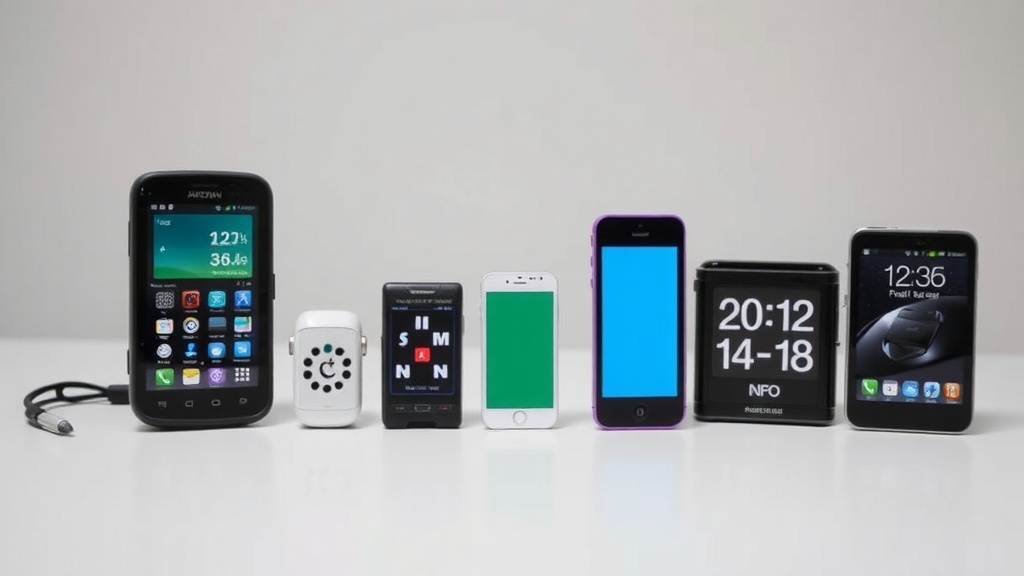
The Evolution of Everyday Tech: Prepare to be Shocked
Take a moment. Look around you. What do you see? A smartphone? A smart speaker? Perhaps even a smart lightbulb glowing softly? These aren’t just isolated gadgets; they are the ubiquitous threads weaving together the fabric of our daily lives, often so seamlessly that we barely register their existence. Yet, beneath this veneer of normalcy lies a story of staggering innovation, a rapid acceleration of progress that has reshaped our world in ways few could have predicted even a decade ago. The evolution of everyday tech isn’t just about faster processors or sleeker designs; it’s about a fundamental shift in how we interact with the world, each other, and even ourselves.
From the clunky, single-purpose devices of yesteryear to the interconnected, intelligent ecosystems that define our present, the journey has been nothing short of astonishing. This article isn’t just a historical recap; it’s an invitation to pause, reflect, and genuinely prepare to be shocked by how far we’ve come, how deeply technology has permeated our existence, and what truly mind-bending advancements lie just around the corner.
The Humble Beginnings: Where We Started (And Forgot)
It’s easy to forget that not so long ago, “high-tech” meant a rotary phone, a monochrome television set with rabbit ears, or perhaps a bulky desktop computer that took up an entire desk and required a floppy disk to boot. These devices, while revolutionary in their time, were often solitary, single-function tools. Communication involved a landline, entertainment came from scheduled broadcasts, and computing was a specialized task, not an everyday experience.
Think about the sheer effort involved in these early interactions. Dialing a phone number required patience and a good memory. Changing TV channels meant physically getting up and turning a knob. Taking a photograph involved film, development, and a wait. The concept of carrying a device in your pocket that could connect you to the entire world, provide instant answers, navigate your journey, and capture high-resolution photos and videos would have sounded like pure science fiction.
The early tech landscape was defined by limitations: limited processing power, restricted connectivity, and a physical tether to power outlets or phone lines. Innovation was incremental, often focusing on making existing tasks slightly easier or faster. Yet, these were the crucial building blocks, the foundational steps that allowed subsequent leaps to occur. Without the clunky mainframes and the simple push-button phones, the intricate web of modern technology could never have been spun. This era reminds us of the profound value of fundamental innovation, even if it seems primitive by today’s standards.
The Silent Revolution: Tech Integrating Seamlessly
The shift began subtly. Transistors replaced vacuum tubes, leading to smaller, more efficient electronics. The advent of personal computers brought computing power into homes and offices, albeit still in a somewhat intimidating package. Then came the true game-changers: portable music players like the Walkman, which liberated audio from the living room, and the early mobile phones, which, despite their brick-like appearance, offered the tantalizing promise of communication on the go.
This period marked a transition from tech as a tool to tech as an extension of our daily lives. Devices started to shrink, become more user-friendly, and, crucially, untethered. The internet, initially a niche academic and military network, began its slow but steady march into mainstream consciousness, first via dial-up modems, then broadband. Suddenly, information was becoming more accessible, and communication across vast distances was no longer a luxury but an emerging expectation. We started seeing the first glimmers of what we now take for granted: instant messaging, email, and the ability to browse vast amounts of information from a home computer. This was the quiet precursor to the digital tsunami, a period where technology began its subtle, yet relentless, integration into the very fabric of our routines.

Image Alt: The Evolution of Everyday Tech: Prepare to be Shocked
The Connected World: Smart Devices and IoT
And then came the big bang: the smartphone. With the iPhone’s introduction in 2007, the world changed virtually overnight. Suddenly, a powerful computer, a high-resolution camera, a music player, a navigation system, and an internet browser were all nestled in the palm of our hands. This device wasn’t just a phone; it was a portal, unlocking an ecosystem of apps that transformed every aspect of our lives, from how we work and shop to how we socialize and entertain ourselves.
The smartphone paved the way for the Internet of Things (IoT), a network of physical objects embedded with sensors, software, and other technologies for the purpose of connecting and exchanging data with other devices and systems over the internet. Our homes began to wake up. Smart thermostats learned our preferences, adjusting temperatures automatically. Smart lighting systems could be controlled with a voice command or a tap on an app. Security cameras offered remote surveillance, and even refrigerators started to track inventory.
“The true shock isn’t just the sheer number of devices we now own, but how seamlessly they communicate with each other, often without us even realizing it. Our homes are transforming into intelligent environments, anticipating our needs before we even articulate them.” – Dr. Evelyn Reed, Futurist
This era ushered in an unprecedented level of convenience and automation. From waking up to a coffee maker that starts brewing before your alarm, to having your doors lock automatically when you leave, smart home devices have fundamentally altered our living spaces. If you’re curious about how deeply this trend is impacting residential living, explore how Your Home Is About to Get a Tech Makeover. This interconnectedness means our devices are no longer just tools; they are part of a larger, responsive system that aims to simplify our existence.
Beyond the Screen: AI, AR/VR, and the Future’s Glimpse
While smartphones and smart homes represent a significant leap, the current wave of innovation is pushing beyond the screen, integrating technology in ways that are even more ambient and intuitive. Artificial Intelligence (AI) is at the forefront of this shift. AI-powered voice assistants like Alexa, Google Assistant, and Siri have become commonplace, effortlessly answering questions, playing music, setting reminders, and controlling our smart devices. We’re interacting with AI daily, often without a second thought.
But AI’s influence extends far beyond voice commands. It’s powering personalized recommendations on streaming services, optimizing traffic flow in smart cities, enhancing medical diagnostics, and even helping to design new materials. Machine learning algorithms are constantly analyzing data, learning our patterns, and anticipating our needs, making our daily interactions with technology feel almost prescient.
Beyond AI, Augmented Reality (AR) and Virtual Reality (VR) are beginning to bridge the digital and physical worlds in new and exciting ways. While VR headsets transport us to entirely different digital environments for gaming or immersive experiences, AR overlays digital information onto our real-world view. Think of navigation apps that display directions directly onto the road ahead, or apps that let you visualize furniture in your living room before you buy it. These technologies are still maturing, but their potential to revolutionize everything from education and healthcare to entertainment and retail is immense. They promise to make our interaction with information and digital content far more intuitive and integrated, reshaping Your Daily Routine Just Got a Tech Upgrade.
The future promises even more profound integrations, with concepts like ambient computing – where technology is so pervasive and intuitive that it fades into the background, responding to our needs without explicit commands – and brain-computer interfaces beginning to move from the realm of science fiction to serious research.
The Unseen Impact: Convenience, Data, and Dilemmas
This rapid evolution of everyday tech has undeniably brought unparalleled convenience and efficiency. We can connect with loved ones across continents instantly, access vast amounts of information at our fingertips, automate mundane tasks, and navigate complex cities with ease. Our lives are, in many ways, richer, more informed, and more connected than ever before. This is the positive “shock” – the realization of how much easier our lives have become thanks to these advancements.
However, this pervasive technological integration also brings its own set of challenges and ethical dilemmas. The very convenience that makes our lives easier often comes at the cost of personal data. Every interaction with a smart device, every click on a website, every voice command, generates data. This data is then used to personalize experiences, target advertisements, and, in some cases, can raise significant privacy concerns. Understanding what data is being collected and how it’s used is becoming an increasingly critical aspect of digital literacy.
Furthermore, the constant connectivity and omnipresence of screens raise questions about mental well-being, the impact of excessive screen time, and the potential for digital addiction. There’s also the widening “digital divide,” where access to these transformative technologies is not equally distributed, potentially exacerbating existing social and economic inequalities. As we marvel at the advancements, it’s crucial to also acknowledge and actively address these complex societal implications. Balancing innovation with responsibility is key.
What’s Next? Peering into the Crystal Ball
The pace of innovation shows no signs of slowing down. So, what’s next in the breathtaking evolution of everyday tech? We can anticipate a future where technology becomes even more predictive, personalized, and, in many ways, invisible.
- Ambient Computing: Imagine a world where your environment anticipates your needs. Your car automatically adjusts climate based on your preferences and external weather, your home lights adapt to your mood, and your grocery list is updated based on your consumption patterns, all without explicit commands. This seamless, context-aware interaction will define our future.
- Hyper-Personalization: AI will continue to refine its understanding of individual preferences, delivering experiences and services that are uniquely tailored to each user. This could range from truly personalized learning experiences to fashion recommendations that perfectly match your style and current mood.
- Bio-Integrated Tech: Wearable technology will evolve beyond smartwatches and fitness trackers. Implants and bio-sensors could monitor health with unprecedented accuracy, providing early warnings for diseases or even enhancing cognitive functions. While still largely in the experimental phase, these gadgets that defy physics (and your wallet) are rapidly pushing the boundaries of what’s possible, as discussed further at Gadgets That Defy Physics (And Your Wallet).
- Sustainable Tech: As our reliance on technology grows, so too will the focus on making it more environmentally friendly, from energy-efficient devices to ethical sourcing of materials and circular economy principles for electronics.
The next wave of tech trends will not just be about doing more; it will be about doing things better, more intuitively, and with a greater awareness of our overall well-being and environmental impact. The future isn’t just about more gadgets; it’s about a more intelligent, interconnected, and potentially harmonious existence.
Conclusion: Embracing the Shock
From the clunky telephone to the predictive power of AI, the evolution of everyday tech has been a whirlwind of innovation, fundamentally altering the landscape of human experience. The journey from scarcity of information to an overabundance, from isolated devices to deeply interconnected ecosystems, truly warrants a moment of awe – and perhaps a little shock.
We stand at a fascinating juncture where the lines between the physical and digital worlds continue to blur. Our relationship with technology is no longer one of simple usage but of deep integration. As we navigate this ever-changing landscape, the key lies in informed engagement. Understanding the power, potential, and pitfalls of these advancements allows us to harness them for good, shaping a future that is not just technologically advanced but also human-centric and equitable.
So, take a moment to appreciate the magic around you. The devices that once seemed futuristic are now mundane, and today’s cutting-edge will be tomorrow’s everyday. The digital transformation is ongoing, and the most exciting, and perhaps most shocking, innovations are still yet to come. What everyday tech advancement has surprised you the most? Share your thoughts in the comments below!
Q&A: Your Questions About Everyday Tech Evolution Answered
Q1: How quickly is everyday tech evolving?
A1: The pace of everyday tech evolution is accelerating rapidly, often described as exponential. What took decades to develop in the mid-20th century might now take mere years or even months to advance significantly. Technologies like AI, 5G, and IoT are converging, creating new possibilities at an unprecedented rate. This rapid change is one of the most shocking tech advancements we’re experiencing.
Q2: Are there any downsides to this rapid tech evolution?
A2: Yes, while there are immense benefits, rapid tech evolution also brings challenges. These include data privacy concerns, the risk of digital addiction, the widening digital divide, the environmental impact of electronic waste, and ethical dilemmas surrounding AI and automation. It’s crucial for individuals and societies to actively address these issues.
Q3: What’s the difference between AI, IoT, and AR/VR in everyday tech?
A3:
- AI (Artificial Intelligence): Refers to computer systems that can perform tasks normally requiring human intelligence, such as learning, problem-solving, and decision-making. In everyday tech, it powers voice assistants, personalized recommendations, and smart home automation.
- IoT (Internet of Things): Is a network of physical objects embedded with sensors, software, and other technologies that connect and exchange data over the internet. This includes smart devices like thermostats, doorbells, and appliances that “talk” to each other.
- AR/VR (Augmented Reality/Virtual Reality): AR overlays digital information onto the real world (e.g., Snapchat filters, IKEA’s AR app), while VR creates entirely immersive simulated environments (e.g., VR gaming headsets). Both aim to change how we interact with digital content.
Q4: How can I keep up with new tech trends without feeling overwhelmed?
A4: Staying informed is key, but it doesn’t mean becoming an expert in everything. Focus on areas that genuinely interest you or impact your daily life. Follow reputable tech blogs (like Wired.com or TechCrunch.com), subscribe to newsletters, and engage in discussions. Most importantly, remember that you don’t need to adopt every new gadget immediately. Thoughtful adoption is better than constant upgrading. Prioritize tools that genuinely enhance your life or solve a problem for you.
Q5: Will smart homes eventually replace human interaction for daily tasks?
A5: While home automation and AI can certainly streamline and automate many mundane daily tasks, the goal is typically to augment human capabilities and free up time, not to entirely replace human interaction. For example, a smart refrigerator might order groceries, but you still decide what to cook. The emphasis is on convenience and efficiency, allowing us to focus on more meaningful interactions and activities. The future of technology aims to serve us, not overshadow us.