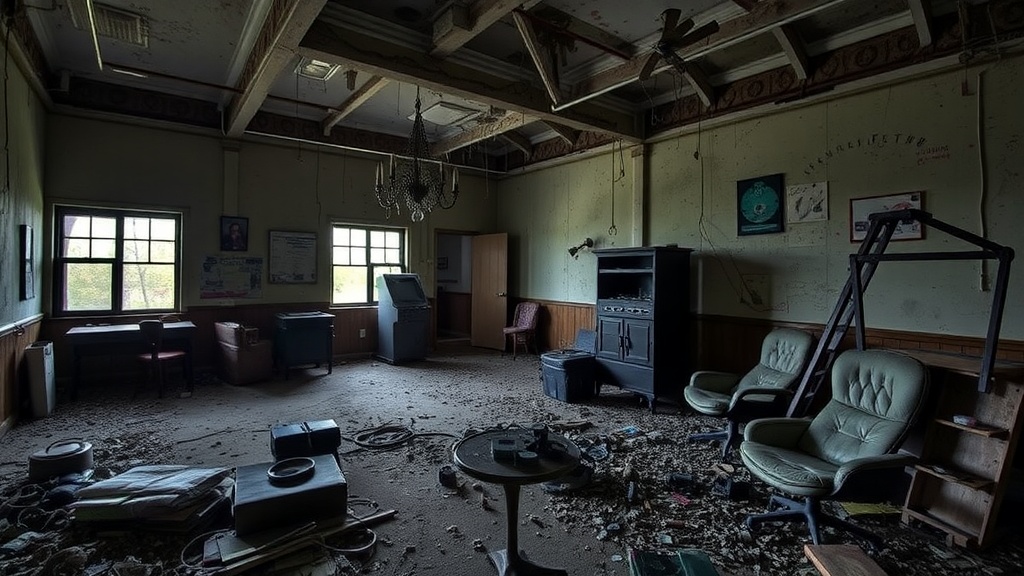
Unsettling Things Found in Abandoned Buildings
There’s a raw, undeniable allure to abandoned buildings. Silent sentinels of a forgotten past, they stand as monuments to lives once lived, industries once boomed, and dreams once chased. For many, the crumbling walls and shattered windows hold a powerful, magnetic pull, inviting whispers of stories untold and secrets buried beneath layers of dust and decay. This fascination has given rise to a global phenomenon known as urban exploration, or “urbex,” where adventurers brave hazardous conditions to document and experience these fascinating, often unsettling, places.
But it’s not just the structures themselves that captivate us; it’s what lies within. The remnants left behind, often untouched for decades, transform these derelict spaces into accidental time capsules. While some finds are merely mundane objects overtaken by entropy, others are deeply unsettling things found in abandoned buildings that can send shivers down your spine, pique intense curiosity, or even hint at darker, more mysterious narratives. From personal relics hinting at sudden departures to bizarre symbols suggesting hidden rituals, the contents of these forgotten places offer a chilling glimpse into the unknown.
Why Abandoned Buildings Fascinate Us (and Unsettle Us)
Our fascination with abandoned buildings stems from a complex mix of emotions. Psychologically, they tap into our innate curiosity about the past, our fear of the unknown, and a profound sense of melancholy for what once was. These structures are more than just empty spaces; they are silent witnesses to history, each creaking floorboard and peeling paint chip a testament to the passage of time. They evoke a unique feeling of “liminality” – a space between states, where the past still echoes but the future remains unwritten.
For urban explorers, the thrill lies in discovery, the challenge of navigating treacherous environments, and the chance to capture striking photographs of decay and beauty. Yet, this thrill is often intertwined with a pervasive sense of unease. The silence, broken only by the wind or the drip of water, amplifies every shadow and rustle. The objects left behind, imbued with the energy of their former owners or users, often trigger a feeling of intrusion, as if one is peering into a private, forgotten world. It’s this delicate balance between captivating history and inherent creepiness that makes abandoned buildings, and their contents, so compelling. They remind us of impermanence, the fragility of human endeavor, and the persistent mystery of what happens when the lights go out for good.

Personal Relics: Echoes of Lives Left Behind
Perhaps the most poignant and unsettling things found in abandoned buildings are the intensely personal relics that offer a raw glimpse into forgotten lives. These aren’t just objects; they’re fragments of stories, moments frozen in time, often suggesting sudden departures or lives abruptly altered.
Imagine walking into a decaying home and finding a dusty wedding album on a coffee table, pages stuck together, the faces of smiling strangers fading with time. Or a child’s crayon drawing still taped to a refrigerator door, its bright colors a stark contrast to the surrounding gloom. These simple items become profoundly moving in a deserted setting, prompting endless questions: Who were these people? Why did they leave? What became of them?
- Old Photographs & Diaries: A stack of black-and-white photographs scattered on the floor, a diary with faded ink revealing intimate thoughts – these are windows into souls. They provide a tangible link to individuals whose existence might otherwise be completely erased. The sense of invasion, coupled with empathy for the unknown subjects, can be deeply unsettling.
- Children’s Toys: A solitary rocking horse in a nursery, a doll with a missing eye staring up from the floorboards, a miniature teacup set arranged as if waiting for guests. Children’s items, particularly dolls, often evoke a strong sense of uncanny valley when encountered in desolate settings. They speak of innocence lost, potential tragedies, and the abrupt end to childhood play.
- Clothing & Personal Effects: A pair of shoes neatly placed by a bed, a coat still hanging in a closet, a half-packed suitcase in a hallway. Such finds suggest a departure that was hasty, unplanned, or perhaps never completed. They make the absence of life acutely felt, creating an eerie presence out of void.
- Medical Equipment or Prosthetics: Discovering an old wheelchair in a corridor, a set of crutches leaning against a wall, or even more disturbingly, a prosthetic limb, can be truly chilling. These items are inherently linked to vulnerability, illness, and human fragility, amplifying the somber atmosphere of an abandoned hospital or home.
These personal artifacts transform a mere building into a powerful reminder of human existence and its transient nature. They evoke a blend of sadness, curiosity, and a haunting sense of the past refusing to truly die. For more about strange discoveries in residential settings, you might be interested in The Strangest Things Ever Discovered in People’s Homes.
Occult, Ritualistic, and Macabre Discoveries
Beyond the personal and poignant, some finds in abandoned buildings veer sharply into the realm of the truly disturbing. These are the discoveries that hint at hidden rituals, dark practices, or acts that defy rational explanation, leaving explorers with a profound sense of dread.
One of the most immediate signs of something sinister is the presence of occult symbols or makeshift altars. Imagine stumbling upon a room where a pentagram is scrawled on the floor, surrounded by melted candles, animal bones, and strange offerings. These aren’t just random objects; they’re deliberately arranged, suggesting a purpose that often feels malevolent.
- Altars & Symbols: Chalk or paint markings on walls and floors, often geometric or symbolic, can be unnerving. Circles of stones, arrangements of candles, or even crude effigies constructed from natural materials strongly suggest ritualistic practices. The very idea that such activities took place in these forgotten corners of the world is deeply unsettling.
- Effigies & Dolls: Beyond children’s toys, homemade dolls with disturbing features, often pierced with pins or adorned with unusual objects, immediately bring to mind voodoo rituals or other forms of folk magic intended for curses or dark purposes. The craft of such items, coupled with their symbolic intent, adds a layer of genuine creepiness.
- Strange Collections: Sometimes, explorers find collections that are less ritualistic and more macabre. This could include preserved animals in jars, taxidermy gone wrong, disturbing artwork depicting grotesque scenes, or even unsettling medical specimens from an unknown source. These finds often speak to a former inhabitant with profoundly peculiar or even disturbing interests.
- Evidence of Squatters or Cults: While some squatters leave little trace, others might set up more elaborate, clandestine operations. Discovering makeshift camps adorned with strange literature, propaganda, or a clearly defined hierarchy of living spaces can point towards the activities of a fringe group or cult that sought refuge in anonymity. Such situations can be dangerous, as these groups may not welcome intruders.
These types of discoveries ignite a primal fear, hinting at a darker side of human nature that prefers to operate in the shadows. They transform a place of forgotten history into one of potential ongoing mystery, and sometimes, even active danger.
Industrial, Scientific, and Medical Horrors
The decay of industrial and medical complexes often holds a different, yet equally potent, kind of unsettling atmosphere. These vast, cavernous spaces, designed for specific functions, become monstrous husks when abandoned, filled with the ghosts of labor, suffering, and scientific ambition gone awry.
Perhaps the most notorious among these are abandoned asylums and hospitals. Once places of healing or confinement, their empty halls now echo with imagined cries and the weight of untold stories. Finding rusty surgical instruments on a table, patient files detailing harrowing treatments, or even padded cells and restraints, paints a chilling picture of past suffering. The sheer scale of these institutions, combined with the personal pain they once contained, makes them particularly eerie and resonant. The lingering aura of human struggle and medical experimentation can be overwhelmingly disturbing.
- Laboratories: Deserted labs, whether in universities, factories, or standalone research facilities, often contain a bizarre array of unsettling items. Flasks filled with unknown substances, test tubes, bubbling vats (now stagnant), and even preserved specimens that hint at genetic experiments or dangerous chemical work. The potential for hazardous materials in such locations is very real, adding a layer of physical danger to the psychological unease.
- Factories and Industrial Ruins: While less overtly “creepy” than an asylum, abandoned factories possess a different kind of unsettling power. Gigantic, rusting machinery, conveyor belts that lead nowhere, unfinished products half-assembled on lines – these speak to the sudden, often catastrophic, end of an industry. The silence that fills these once-noisy spaces can feel oppressive, filled with the “ghosts” of workers and the crushing weight of economic collapse.
- Nuclear/Disaster Sites: Places like Chernobyl in Ukraine or Fukushima in Japan represent the pinnacle of industrial abandonment, born from catastrophe. Ghost towns with untouched homes, schools, and amusement parks are perhaps the most extreme examples of things left behind. The invisible threat of radiation, combined with the utterly desolate landscape, creates an unparalleled sense of post-apocalyptic dread. These sites are stark reminders of humanity’s capacity for both progress and self-destruction.
These locations are often characterized by their sheer scale and the overwhelming sense of purpose that once defined them. When that purpose is stripped away, what remains is a powerful, often horrifying, testament to human ambition, suffering, and the cold indifference of time.
Unexpected and Puzzling Artifacts
Not all unsettling finds fit neatly into categories of personal relics or macabre rituals. Sometimes, urban explorers stumble upon objects that are simply baffling, out of place, or hint at deeper, unsolved mysteries. These are the finds that spark endless speculation and ignite the imagination with possibilities that range from mundane to truly extraordinary.
Imagine discovering a hidden stash of something unexpected. It could be an old, locked safe built into a wall, its contents unknown. It might be a cache of antique weapons hidden beneath floorboards, suggesting a secret armory. Or perhaps, a significant sum of money, long forgotten, decaying in a forgotten drawer. Such finds often point towards past criminal activity, paranoia, or simply an individual’s eccentric hoarding habits. The very act of finding something purposefully concealed adds an extra layer of intrigue and raises questions about who hid it and why.
- Unexplained Technology: In older abandoned buildings, one might discover obsolete but complex machinery or strange, custom-built devices that seem to defy contemporary understanding. While often just specialized equipment from a bygone era, their unusual design or unknown function can create a sense of mystery. In rare cases, explorers might even encounter strange communication devices or experimental apparatus that looks like something out of science fiction. While many of these might eventually be identified, their initial discovery is undeniably puzzling.
- Art Installations or Pranks: It’s important to remember that not everything found in an abandoned building is a relic of its original purpose or inhabitants. Sometimes, other urban explorers, artists, or even local pranksters use these spaces for their own purposes. A bizarre sculpture made of found objects, a room filled with meticulously arranged but nonsensical items, or a strategically placed mannequin designed to give a fright – these can be profoundly unsettling upon initial discovery, even if their origin is ultimately benign. They underscore the dynamic nature of these forgotten spaces, which continue to be repurposed and reinterpreted.
These puzzling artifacts remind us that the stories within abandoned buildings are not always clear-cut. They can be ambiguous, contradictory, and often leave more questions than answers, challenging our perceptions and inviting us to consider possibilities beyond the obvious. For more on ancient, unexplainable items, you might enjoy Ancient Artifacts That Defy Explanation.
The Ethics and Dangers of Urban Exploration
While the allure of unsettling things found in abandoned buildings is strong, it’s crucial to approach urban exploration with a keen awareness of its inherent dangers and ethical considerations. The thrill of discovery should never overshadow responsible conduct and personal safety.
Safety First: Abandoned buildings are inherently hazardous environments. They can suffer from structural instability, with collapsing floors, rotting stairs, and falling debris posing significant risks. Furthermore, many older buildings contain hazardous materials like asbestos, lead paint, and mold, which can cause severe health problems. Pockets of methane gas or other toxic fumes can also accumulate, particularly in basements or sealed-off areas. Beyond the structural and chemical dangers, explorers might encounter squatters, drug users, wild animals, or even traps set by property owners. Always prioritize your safety:
- Never explore alone. Go with a trusted group.
- Wear appropriate safety gear: sturdy boots, long pants, gloves, a hard hat, and a dust mask/respirator.
- Carry multiple light sources (headlamp, flashlight) and a fully charged phone.
- Know your limits. If a structure looks too unstable, do not enter.
Legal Implications: In most jurisdictions, entering an abandoned building without permission constitutes trespassing, which can lead to fines, arrest, or other legal penalties. Property owners, even of abandoned sites, retain their rights. It’s also important to be aware of local laws regarding property damage or removal of items.
Ethical Considerations: The cardinal rule of urban exploration is often paraphrased as: “Take nothing but pictures, leave nothing but footprints.” This ethos emphasizes respect for the site’s history and its original state. Removing artifacts, vandalizing property, or disturbing the existing decay detracts from the historical value and ruins the experience for future explorers.
“Urban exploration is a delicate dance with history,” says renowned urbex photographer, Jane Doe. “Our role isn’t to alter the narrative, but to observe and document it respectfully. Every artifact tells a story, and it’s our ethical obligation to ensure those stories remain intact for others to discover, even if only through photographs.”
Responsible exploration also means being discreet to avoid drawing unwanted attention to sites, which could lead to their destruction or further deterioration. The goal is to preserve, not to exploit.
The Stories Behind the Finds
Every unsettling object unearthed in an abandoned building has a story, even if we can only piece together fragments. These finds are more than just dusty relics; they are tangible links to human history, personal tragedies, triumphs, and the inexorable march of time. Sometimes, a particularly compelling discovery can even kickstart historical investigations, leading researchers to uncover lost facts about a building’s past residents or purpose. In rare instances, evidence of a crime or human remains can transform an exploration into a police investigation, bringing closure to long-forgotten cases.
Our innate desire to understand these stories is what truly drives the fascination. Why was that doll left behind? What happened in that eerie ritualistic room? Who worked these massive, rusting machines? These questions tap into a universal human need to connect with the past and comprehend the mysteries of life and death, of memory and oblivion. The echoes of these forgotten narratives resonate deeply, reminding us that every abandoned space was once vibrant, teeming with life, and full of its own unique secrets. For more insights into hidden histories and the human tendency to seek explanations, you might find The Most Absurd Conspiracy Theories Out There an interesting read.
Conclusion
The allure of unsettling things found in abandoned buildings is undeniable. These forgotten spaces, frozen in various stages of decay, offer a unique window into the past, presenting us with artifacts that range from the deeply personal to the outright macabre. From dusty photographs that whisper forgotten names to strange symbols suggesting hidden rituals, each discovery tells a silent story of lives lived, industries lost, and mysteries left unsolved.
Urban exploration, when undertaken safely and ethically, allows us to engage with these accidental time capsules, reminding us of the transient nature of human endeavors and the powerful grip of history. Whether it’s the sheer scale of an abandoned hospital, the personal tragedy hinted at by a child’s toy, or the puzzling nature of an unidentifiable artifact, these finds challenge our perceptions, ignite our imaginations, and leave an indelible mark on our collective consciousness. They are not just unsettling objects; they are poignant reminders of impermanence, powerful prompts for reflection, and enduring testaments to the complex, often dark, tapestry of human experience.
Q&A Section
Q1: Is urban exploration legal?
A1: In most places, no. Entering an abandoned building or private property without explicit permission from the owner is considered trespassing and can lead to legal penalties. Some public abandoned sites or museums might offer guided tours, which are legal ways to experience these spaces.
Q2: What’s the most common unsettling thing found in abandoned buildings?
A2: While “most unsettling” is subjective, personal effects like old photographs, children’s toys (especially dolls), and clothing are frequently encountered and often evoke the strongest emotional and unsettling reactions due to their direct connection to human lives.
Q3: How do buildings become abandoned?
A3: Buildings become abandoned for a variety of reasons, including economic decline (factories closing, towns dying), natural disasters (floods, earthquakes), poor maintenance leading to decay, foreclosure or bankruptcy, changes in ownership or urban planning, or even sudden, unexplained departures of inhabitants.
Q4: What should you do if you find something truly disturbing (e.g., human remains, evidence of a crime)?
A4: If you discover anything that suggests a crime has been committed, human remains, or dangerous materials (like explosives or large caches of drugs), do not touch or disturb anything. Immediately leave the premises and contact local law enforcement or emergency services. Provide them with the exact location and details of your discovery. Your safety and the integrity of a potential crime scene are paramount.