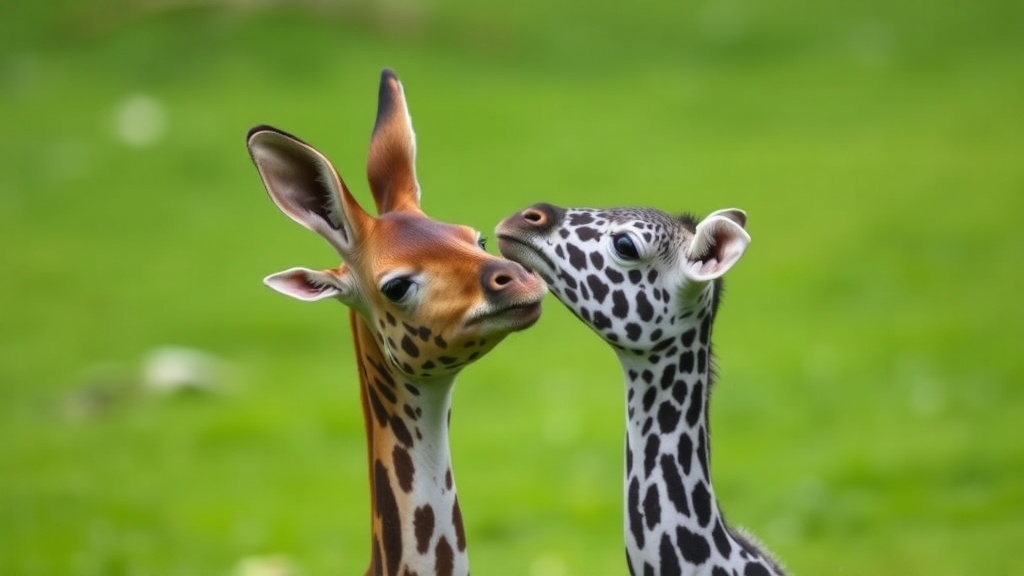
Bizarre Animal Friendships That Melt Hearts
The animal kingdom, often portrayed as a brutal arena of survival where only the fittest endure, holds astonishing secrets. Beyond the fierce predator-prey dynamics and the strict boundaries of species, lies a phenomenon that defies logic, melts hearts, and sparks wonder: bizarre animal friendships. These unexpected alliances, where creatures of vastly different species form deep, affectionate bonds, challenge our understanding of nature and remind us that love, companionship, and even compassion transcend the lines we draw.
From a massive elephant cuddling with a tiny dog to a lion, bear, and tiger sharing an unbreakable bond, these unusual animal pairs offer a heartwarming glimpse into a world where differences are celebrated, and connection is paramount. They are powerful testaments to the universal need for belonging, reminding us that emotional needs often trump instinctual divides.
Why Do These Unconventional Alliances Form?
At first glance, the formation of interspecies friendships seems counterintuitive. Why would a predator befriend its natural prey? Or a solitary animal seek companionship with a highly social one? The reasons behind these extraordinary connections are complex, often rooted in shared experiences, environmental factors, and the deep-seated emotional needs of the animals involved.
One of the most common catalysts for cross-species bonding is a shared upbringing, especially when young animals are raised together in captivity or after rescue. In environments where the usual threats of predation and competition for resources are absent, species barriers can dissolve. Animals that might naturally be wary of each other in the wild can instead form powerful attachments, often imprinting on one another as they grow. This is particularly true for orphaned animals, who may find solace and a surrogate family in a member of a different species.
“These relationships remind us that there’s a deep emotional connection among all living beings, going beyond what we might initially perceive as ‘natural’ or ‘instinctual’,” explains Dr. Marc Bekoff, a renowned ethologist and author. “Animals, like humans, seek comfort, security, and companionship, and sometimes, the best source of that comes from an unexpected place.”
Mutual comfort and support also play a significant role. Animals, just like people, can experience loneliness, trauma, or the need for a playmate. A bond with another species can provide psychological and emotional benefits, reducing stress and enhancing well-being. Sometimes, it’s simply about curiosity and the desire to play, leading to playful interactions that blossom into genuine affection. These factors demonstrate the remarkable adaptability and emotional depth of the animal kingdom, revealing that animal behavior can be far more nuanced than we often assume.
Iconic Duos and Trios: Stories of Unbreakable Bonds
The world is rich with tales of unlikely animal friends that continue to inspire and amaze. These stories are not just cute anecdotes; they offer profound insights into animal emotions, intelligence, and the universal language of connection. Many of these connections are often unseen, much like the moments captured in Unseen Wildlife Moments Caught on Camera.
The Lion, Bear, and Tiger Trio (BLT)
Perhaps one of the most famous examples of bizarre animal friendships is the “BLT” trio: Leo the African lion, Baloo the American black bear, and Shere Khan the Bengal tiger. Rescued in 2001 during a drug raid in Atlanta, these three cubs were found severely malnourished and injured. Instead of being separated by species, they were brought to Noah’s Ark Animal Sanctuary in Locust, Georgia, where they healed and grew up together, forming an unbreakable bond.
Living in the same enclosure for over 15 years, they ate, slept, and played together, demonstrating an incredible level of affection and camaraderie. Baloo, the bear, was often the peacemaker, while Leo, the lion, was the more protective one, and Shere Khan, the tiger, the most mischievous. Their unique animal bond captivated the world, proving that love knows no species boundaries, even among apex predators. Sadly, Leo passed away in 2016, followed by Shere Khan in 2018, leaving Baloo as the last survivor, but their legacy of extraordinary friendship lives on.
Tarra the Elephant and Bella the Dog
The Elephant Sanctuary in Tennessee became the setting for another incredible animal friendship between Tarra, a rescued Asian elephant, and Bella, a tiny stray dog. Tarra, who had spent decades performing in the circus, found peace and friendship in the company of Bella. Their bond was evident in their daily routines: they ate together, slept together, and often walked side-by-side through the sanctuary’s vast grounds.
Bella, despite her small size, was incredibly protective of Tarra. When Tarra suffered a debilitating foot injury, Bella stayed by her side, even waiting outside the barn during her treatments. The two would spend hours simply existing in each other’s presence, a testament to the profound comfort and connection they shared. Their story highlights the deep emotional capacity of animals and the unexpected places where love can bloom.
Koko the Gorilla and All Her Kittens
Koko, the western lowland gorilla famous for her mastery of American Sign Language, demonstrated a profound capacity for interspecies love. Koko had long expressed a desire for a kitten, often “signing” about it. On her 44th birthday, she received a litter of kittens and immediately took on a maternal role, cradling them gently, petting them, and even attempting to sign to them.
Koko’s affection for her feline companions went beyond mere curiosity; she treated them as her own children, showering them with love and displaying genuine grief when one of them, a tiny gray kitten named All Ball, accidentally escaped and was hit by a car. Her emotional response, communicated through sign language, left researchers astonished and offered irrefutable proof of her deep animal empathy and capacity for profound animal bonds.
Owen the Hippo and Mzee the Tortoise
The devastating 2004 Indian Ocean tsunami brought about a heartwarming, if unusual, friendship in Kenya. A young, orphaned hippopotamus, barely a year old, was swept from his mother into the sea and rescued by villagers. Named Owen, the traumatized hippo was brought to Haller Park, a wildlife sanctuary near Mombasa. There, he quickly adopted Mzee, a 130-year-old giant tortoise, as his surrogate parent.
Owen would follow Mzee everywhere, mimicking his movements, resting his head on Mzee’s shell, and even licking the old tortoise. Mzee, initially wary, eventually accepted Owen, allowing the young hippo to find comfort and security in his presence. Their unique hippo tortoise friendship became a global sensation, symbolizing hope and resilience in the face of tragedy.
Bubbles the Elephant and Bella the Labrador
Another captivating elephant dog friendship blossomed at The Myrtle Beach Safari in South Carolina. Bubbles, an African elephant rescued from poachers in Africa, found a playful companion in Bella, a Labrador retriever. Their interactions often revolved around the water. Bubbles, weighing several tons, would gently toss a ball into the water for Bella to retrieve, demonstrating incredible control and tenderness.
Their bond is a beautiful display of pure joy and companionship. They swim together, play fetch, and simply enjoy each other’s company, illustrating how creatures of vastly different sizes and natural habitats can find common ground and form powerful, heartwarming animal stories.
Suryia the Orangutan and Roscoe the Blue Tick Hound
At the Rare Species Fund in Myrtle Beach, South Carolina, a remarkable orangutan dog friendship developed between Suryia, an orangutan, and Roscoe, a stray blue tick hound. Roscoe reportedly followed the staff home one day, and Suryia immediately took to him.
Their days are filled with play, walks, and cuddles. Suryia is often seen carrying Roscoe on her back during their strolls, and they frequently share meals and naps. Their primate animal bond is a touching example of how empathy and the desire for connection can bridge even the most significant evolutionary gaps.
The Dachshund and the Owl
In a charming tale of interspecies adoption, a tiny dachshund named Biwa in Japan became a surrogate mother to an orphaned owlet. Found abandoned, the owlet was brought home to the family, where Biwa immediately took to nurturing it, cleaning its feathers and providing warmth.
This gentle care from a small dog towards a young bird, an animal that could easily be seen as prey, highlights the surprising maternal instincts and compassion that can emerge across species boundaries, proving that even the most unlikely pairings can result in profound tenderness.
The Science Behind the Cuddles: What Drives Interspecies Affection?
While the sight of a dog nuzzling a deer or a cat cuddling a rat might seem purely anecdotal, scientific research is beginning to shed light on the biological and psychological mechanisms behind these bizarre animal friendships.
One key player is oxytocin, often dubbed the “love hormone” or “bonding hormone.” This neurochemical is released in mammals during social bonding, maternal care, and positive social interactions. Studies have shown that oxytocin levels can increase in both humans and animals during interspecies interactions, suggesting a shared neurological basis for attachment, regardless of species. This explains why an elephant might feel a similar comfort with a human or a dog as it would with another elephant.
Mirror neurons, fascinating brain cells that activate both when an individual performs an action and when they observe another performing the same action, may also play a role. While their function in animals is still debated, some theories suggest they contribute to empathy and the ability to understand another’s intentions or emotional state, even across species. This could help explain how animals can “read” each other’s signals and respond appropriately, fostering connection rather than conflict.
Ultimately, these bonds often fulfill fundamental needs for comfort, security, and companionship. Animals, much like humans, seek to reduce stress and feel safe. If an individual of a different species provides that sense of security or offers stimulating play, a bond can easily form, especially when the immediate pressures of survival are removed. These factors contribute to the rich tapestry of animal psychology, where emotions and social needs are just as real as instinct.
Lessons in Love and Acceptance
The existence of bizarre animal friendships offers humanity profound lessons. They challenge our anthropocentric views, urging us to reconsider the complexity and depth of animal emotions. When we witness such compassion, it stands in stark contrast to moments When Mother Nature Shows Her Darkest Side.
These stories are powerful reminders that love knows no boundaries. They teach us about breaking down barriers, fostering tolerance, and embracing acceptance. If a lion can befriend a bear, or a cat can bond with a bird, then surely, we as humans can learn to look past superficial differences and connect on a deeper level.
These unusual animal pairs underscore the universal need for connection and belonging. Whether it’s an orphaned animal finding a surrogate family or a lonely creature seeking companionship, the desire for affectionate bonds is a powerful motivator across the animal kingdom. They inspire us to cultivate greater animal empathy and remind us that compassion is a language understood by all living beings.
The Human Element: Facilitators of Friendship
Many of the most celebrated bizarre animal friendships flourish in environments where humans play a significant role. Animal sanctuaries, rescue centers, and responsible wildlife parks provide the safe, controlled settings where these bonds can form without the constant threat of predation or competition for resources. By offering shelter, food, and medical care, humans create a stable environment that allows animals to express their social and emotional needs more freely.
Early intervention is also key. When young animals from different species are raised together from an early age, they are more likely to imprint on each other and form lasting attachments. Caregivers meticulously observe the animals, ensuring that their interactions remain positive and safe, and intervening if any potential dangers arise.
However, the human role also brings ethical considerations. While heartwarming, it’s crucial that these bonds are genuinely beneficial for the animals involved and not merely for human entertainment. Responsible animal welfare practices dictate that the animals’ well-being and natural behaviors remain paramount. Caregivers must ensure that the environment continues to support both animals’ individual needs, even as their unique bond develops.
The Ephemeral Nature of Some Bonds
While many interspecies friendships last for years, some are inherently temporary. As animals grow, natural instincts can become more pronounced, or size differences might make continued close proximity unsafe. For instance, a small prey animal might happily play with a young predator cub, but as the predator matures and its hunting instincts develop, the relationship may need to be carefully managed or even separated for the safety of the prey animal.
Caregivers at sanctuaries and wildlife centers are keenly aware of these dynamics. They constantly monitor the interactions, looking for any signs of stress, aggression, or a shift in behavior that might indicate the bond is becoming unsustainable. While it’s always sad to see such a connection come to an end, ensuring the safety and well-being of both animals is the priority. These situations highlight the complexities of managing such unusual relationships and the need for constant vigilance. While some bonds are fleeting, others are as enduring as the mysteries surrounding The World’s Most Elusive Creatures Revealed.
A Symphony of Surprising Affection
The world of bizarre animal friendships is a vibrant tapestry woven with threads of compassion, resilience, and unexpected connections. These remarkable stories challenge our preconceived notions of the animal kingdom, revealing a depth of emotion and a capacity for connection that transcends the boundaries of species. They are not merely anomalies but powerful reminders that the desire for companionship and comfort is a universal language spoken by all living creatures.
From the legendary BLT trio to the gentle giant Tarra and her loyal dog Bella, these unusual animal friends truly melt hearts and offer a profound glimpse into a more compassionate and understanding world. They invite us to look beyond differences, embrace the unexpected, and celebrate the incredible, surprising bonds that enrich life on Earth.
Your Questions Answered About Interspecies Bonds
Q1: Are bizarre animal friendships common in the wild?
A1: While true “friendships” characterized by deep affection and companionship are less common in the wild due to the constant pressures of survival, mutualistic relationships (where two different species benefit from each other, like cleaner fish and sharks) are very common. Most documented bizarre animal friendships occur in controlled environments like sanctuaries, zoos, or human homes, where food is plentiful and threats are minimized.
Q2: How long do these unusual animal bonds typically last?
A2: The duration of these bonds can vary greatly. Some are fleeting, perhaps a temporary play relationship between young animals. Others, especially those formed when animals are young and raised together in a stable environment, can last for many years, even a lifetime, as seen with the BLT trio or Tarra and Bella. It largely depends on the species involved, the individual personalities of the animals, and the consistency of their environment.
Q3: Can a predator and prey animal truly be friends?
A3: In controlled environments, yes, especially if they are introduced at a young age and raised together, or if one animal is severely traumatized and seeking comfort. In such cases, the natural predator-prey instincts can be suppressed or simply not triggered towards their specific “friend.” However, it is extremely rare and highly unlikely for a predator and prey animal to form such a bond in the wild, where survival instincts are paramount.
Q4: What role do humans play in forming these friendships?
A4: Humans often play a significant role. They provide the safe, controlled environments (sanctuaries, rescues, homes) where animals from different species can interact without the fear of predation or competition. Humans also facilitate these bonds by raising young animals together, providing care, and ensuring the animals’ needs are met, allowing their social and emotional capacities to develop beyond typical species-specific interactions.
Q5: Do animals feel emotions like love and grief?
A5: Growing scientific evidence and extensive anecdotal observations strongly suggest that animals experience a wide range of complex emotions, including joy, fear, empathy, and grief. The way animals display affection, mourn losses, and seek comfort in interspecies bonds provides compelling evidence for their rich emotional lives, reinforcing the depth and authenticity of these extraordinary relationships.


